Nylon Turf – Pros and Cons
Nylon synthetic turf has distinct advantages that can make it "better" depending on the application, primarily due to its superior strength and durability compared to other common synthetic turf materials like polyethylene and polypropylene.
However, its characteristics also present drawbacks that make other materials preferable for certain uses, like residential lawns.
Here are the general pros and cons of nylon synthetic turf:
Pros of Nylon Synthetic Turf:
- Exceptional Durability and Resilience: Nylon is the strongest and most resilient synthetic turf fiber. The blades have a "memory" and quickly spring back to their upright position after being stepped on or compressed. This makes it highly resistant to matting and wear from heavy foot traffic.
- High Melting Point and Heat Resistance: Nylon has the highest melting point among turf materials, offering superior resistance to heat damage, including reflections from low-E windows which can melt other types of turf. It holds up well in very hot climates.
- Minimal Maintenance: Due to its resilience, nylon turf requires the least amount of brushing or fluffing to maintain its shape and appearance.
- Longevity: Its superior strength and resistance to wear and tear generally translate to a longer lifespan.
Cons of Nylon Synthetic Turf:
- Higher Cost: Nylon is typically the most expensive type of artificial grass fiber.
- Rough Texture: The fibers are stiffer than polyethylene, which can make the turf feel rough, abrasive, or "prickly" under bare feet. This stiffness can also increase the risk of "turf burn" during sports or play.
- Less Natural Appearance: The stiff texture can make nylon look less realistic and less like natural grass compared to softer options like polyethylene.
- Water/Odor Absorption: Nylon is semi-permeable and absorbs water more readily than polyethylene, which can lead to odor issues (especially from pet urine) if not cleaned and deodorized regularly.
Ideal Uses for Nylon Turf:
Due to its resilience, nylon is often considered the best choice for:
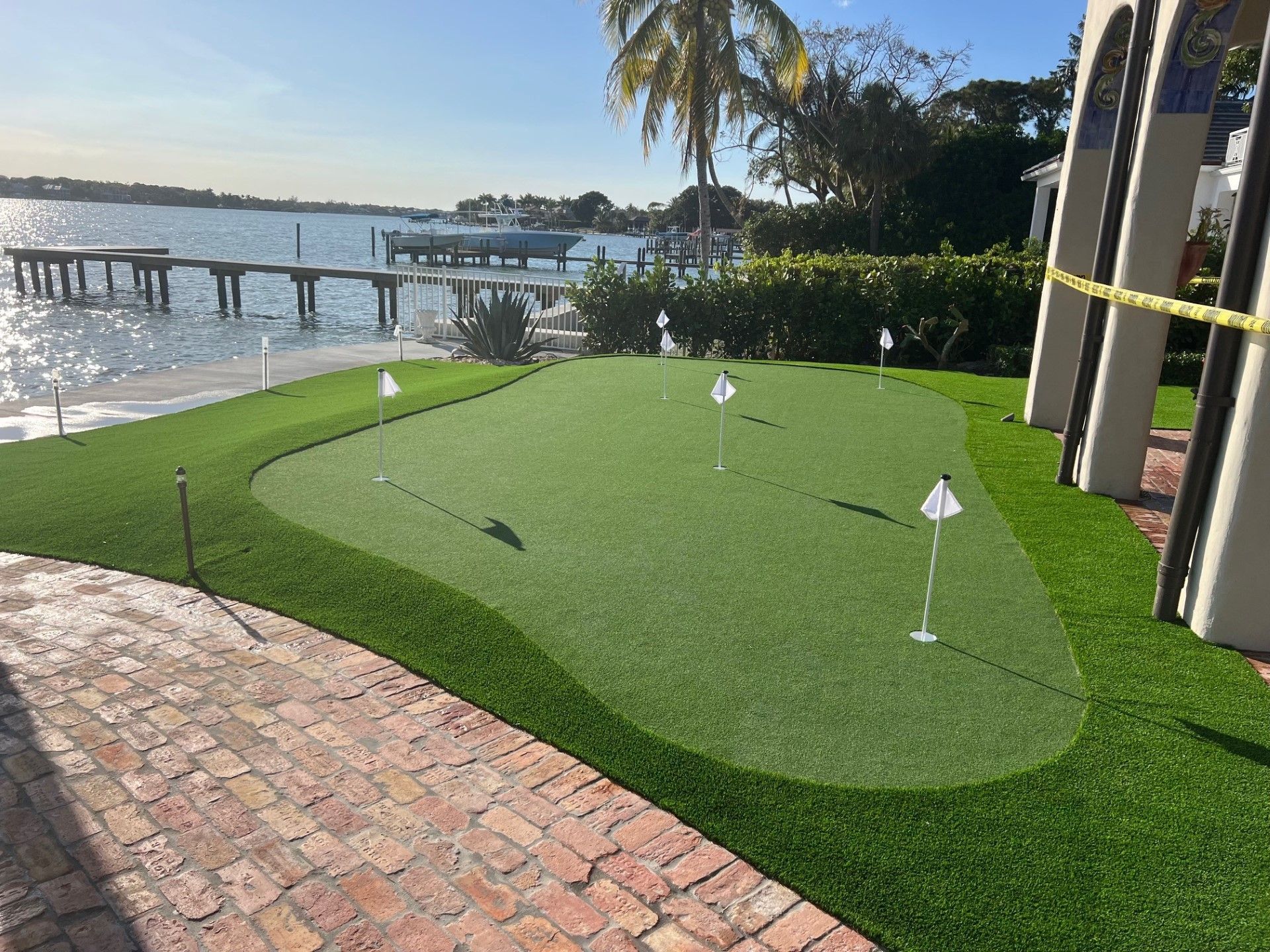
- Putting Greens: Its stiffness helps the grass blades hold the precise, short pile height needed for a consistent ball roll.
- High-Traffic Commercial Areas: Where maximum durability is the primary concern.
- Combined with other materials: It is sometimes used as a secondary fiber with polyethylene to add resilience while retaining a softer feel.
FROM VERO BEACH TO JUPITER, THE TEAM AT SYNTHETIC TURF TREASURE COAST HAS OVER 50 YEARS COMBINED EXPERIENCE IN THE SYNTHETIC TURF INDUSTRY. WE CAN MAKE YOUR ARTIFICIAL TURF EXPERIENCE A GREAT ONE!
CALL US TODAY AT 772-245-8546 TO SCHEDULE YOUR FREE CONSULTATION.
About the author
Kathy Leavell
Kathy Leavell is the founder and owner of Synthetic Turf Treasure Coast, a leading provider of synthetic grass solutions for residential and commercial properties in Florida. With over a decade of experience in the industry, Kathy has become a recognized expert in synthetic turf installation, maintenance, and repair. Under her leadership, Synthetic Turf Treasure Coast has earned a reputation for exceptional customer service and high-quality workmanship.
Prior to starting her own business, Kathy worked in sales and marketing roles at several major synthetic turf manufacturers.